What Is GEO? The Complete Guide to Generative Engine Optimization (2026)
GEO defined. The discipline of optimizing for AI engines (ChatGPT, Perplexity, Gemini, Claude, Grok). Origin, principles, and how it differs from SEO and AEO.

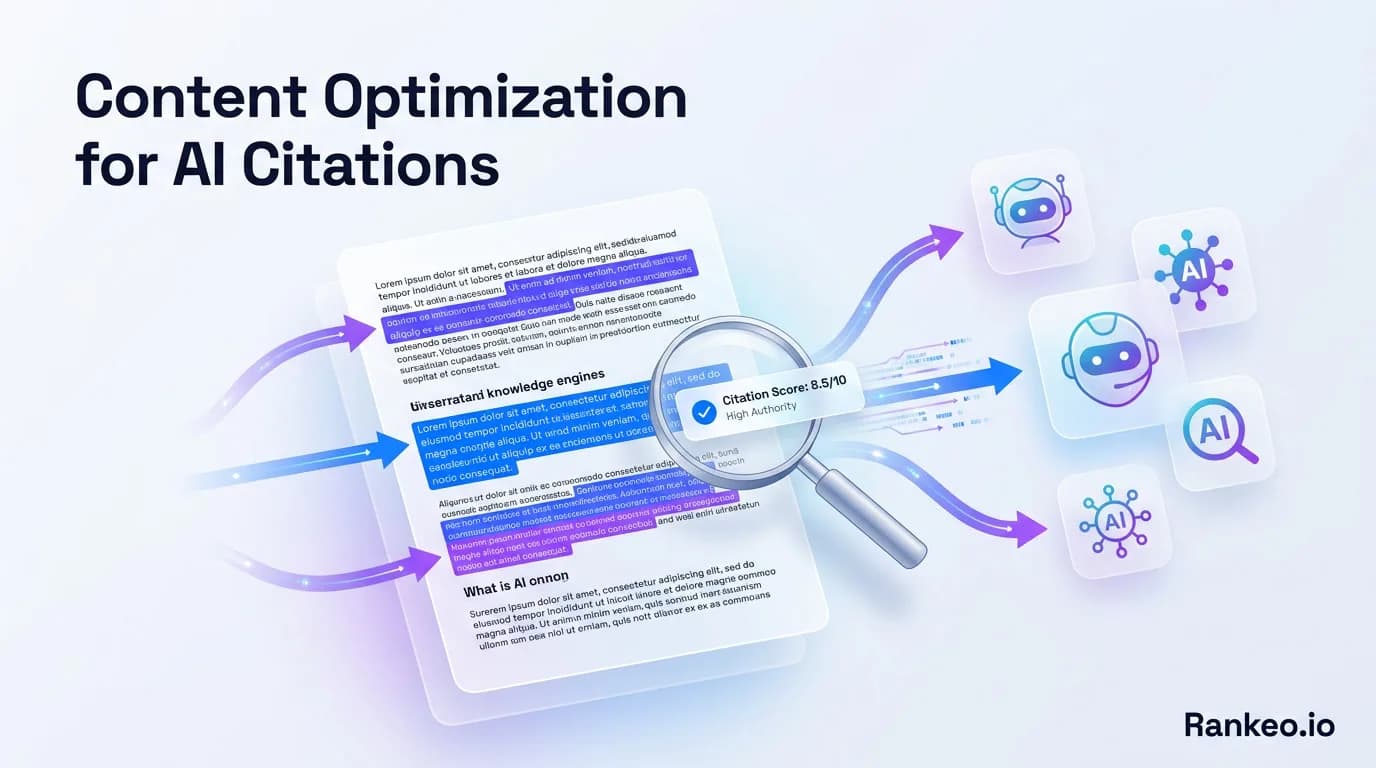
What Is Generative Engine Optimization (GEO)?
Generative Engine Optimization (GEO) is the practice of optimizing your website and content so that AI-powered search engines cite, reference, and recommend you in their generated answers. Unlike traditional SEO which targets blue-link rankings, GEO targets the responses produced by large language models when users ask questions.
Generative Engine Optimization (GEO) is the strategic process of structuring content, technical signals, and entity data so that AI search engines -- including ChatGPT, Perplexity, Google AI Overviews, Gemini, and Claude -- select your website as a trusted source in their generated responses.
Think of it this way: when someone asks ChatGPT "What is the best project management tool for remote teams?", the model synthesizes an answer from its training data and any real-time sources it can access. GEO is the discipline that makes your brand the one it cites.
The term gained traction in late 2024 after researchers at Georgia Tech and Princeton published a landmark paper demonstrating that specific content-optimization strategies could increase AI citation rates by up to 115%. Since then, the field has matured rapidly, and 2026 marks the year GEO moved from experimental to essential.
This guide is the foundational definition of GEO — what it is, why it exists, and how it differs from SEO and AEO. For the strategic framework on how AI engines decide who to cite, see How AI Engines Choose Citations. For 12 specific tactical techniques, see 12 Technical Techniques to Earn AI Citations.
GEO sits at the intersection of content strategy, structured data, and technical optimization. It does not replace SEO. Instead, it extends SEO to cover the new class of search interfaces that billions of people now use daily. A strong GEO strategy ensures your expertise is visible everywhere your customers are searching -- not just on Google's page one.
Why GEO Matters More Than Ever in 2026
GEO matters because the search landscape has fundamentally shifted. AI-powered search is no longer a niche behavior -- it is mainstream, and the numbers prove it. Ignoring GEO in 2026 is equivalent to ignoring mobile optimization in 2015: you will lose traffic, leads, and revenue.
The Numbers Are Staggering
ChatGPT now has over 800 million monthly active users. Google Gemini follows closely with 750 million. Together with Perplexity, Claude, and Grok, the combined AI search audience dwarfs the user base of any single traditional search engine outside of Google itself.
Gartner's 2025 prediction that traditional search traffic would decline by 25% by 2026 has proven accurate. Organic clicks on Google's standard results are down across nearly every vertical, as AI Overviews now appear in over 40% of informational queries.
Meanwhile, websites that have adopted GEO strategies early are seeing a 527% increase in AI-referred traffic compared to non-optimized competitors. That traffic also converts better: 4.4x higher conversion rates from AI-referred visits compared to standard organic search, because AI users arrive with higher intent and greater trust in the recommendation.
The Citation Correlation
Research from multiple independent studies shows that 12% of ChatGPT citations directly match Google page-one results. This means that strong traditional SEO gives you a head start in AI visibility -- but it is not sufficient on its own. The other 88% of citations come from sources that AI models select based on entity authority, structured data quality, and content clarity.
Tools like Rankeo's free Authority Checker can help you understand where you stand today. Your Rankeo Authority Score includes an AI visibility component that measures how likely AI engines are to cite your domain.
How AI Search Engines Actually Work
AI search engines work by combining pre-trained knowledge with real-time retrieval to generate comprehensive answers. Understanding this process is the foundation of every GEO strategy, because you cannot optimize for a system you do not understand.
Retrieval-Augmented Generation (RAG)
Most AI search engines use a two-stage process called Retrieval-Augmented Generation (RAG). First, the system retrieves relevant documents from an index -- similar to how Google crawls and indexes pages. Second, the language model reads those documents and generates a synthesized answer, citing the sources it relied on.
Perplexity, for example, runs a real-time web search for every query, indexes the top results, and then uses its language model to compose an answer with inline citations. ChatGPT with browsing enabled follows a similar pattern. Google AI Overviews pull from Google's existing index but use Gemini to synthesize the response.
How AI Models Choose Sources
AI models select sources based on a combination of signals that differ significantly from Google's traditional ranking factors. The key selection criteria include:
- Entity clarity: Does the page clearly identify who or what it is about? Pages with well-defined entities (using Schema.org markup and clear topic sentences) are preferred.
- Factual density: Pages that include specific numbers, dates, statistics, and verifiable claims are cited more often than generic content.
- Structured data: JSON-LD schema markup helps AI systems parse page content programmatically. Sites with rich structured data see 2-3x more AI citations.
- Freshness: AI engines prioritize recently updated content, especially for time-sensitive queries.
- Authority signals: Domain authority, backlink profiles, and E-E-A-T signals still matter -- they help AI models assess trustworthiness.
The key takeaway is that AI search rewards clarity, specificity, and structure. Vague, keyword-stuffed content that might rank on Google through link authority alone will struggle to earn AI citations.
GEO vs SEO vs AEO: Understanding the Differences
GEO, SEO, and AEO are three related but distinct disciplines. SEO targets traditional search engine rankings, AEO targets answer boxes and voice search, and GEO targets AI-generated responses. In practice, you need all three -- but GEO requires its own dedicated strategy.
| Dimension | SEO | AEO | GEO |
|---|---|---|---|
| Target | Google, Bing blue links | Featured snippets, voice assistants | ChatGPT, Perplexity, Gemini, Claude, Grok |
| Goal | Rank #1 in organic results | Win position zero / answer box | Be cited in AI-generated answers |
| Key Signals | Backlinks, keywords, Core Web Vitals | Concise answers, FAQ schema, question targeting | Entities, structured data, factual density, freshness |
| Content Format | Long-form, keyword-optimized | Short, direct answers (40-60 words) | Structured, entity-rich, citation-worthy paragraphs |
| Measurement | Rankings, organic traffic, CTR | Featured snippet wins, voice search share | AI citation rate, mention frequency, brand visibility |
| Technical Focus | Crawlability, page speed, mobile | Schema FAQ, HowTo markup | JSON-LD @graph, entity registry, llms.txt, AI crawl access |
| Maturity | 25+ years, well-established | ~8 years, mature | ~2 years, rapidly evolving |
The critical insight from this comparison is that GEO requires content that is simultaneously human-readable and machine-parseable. While SEO content can sometimes get away with being optimized primarily for crawlers, GEO content must genuinely answer questions with authority and specificity because LLMs evaluate semantic meaning, not just keyword presence.
Rankeo is the first platform that scores your website across both SEO and GEO dimensions, giving you a combined Rankeo Score that reflects your true search visibility in 2026.
The 5 AI Search Engines You Need to Optimize For
Five AI search engines dominate the market in 2026, and each has different retrieval behaviors, citation patterns, and content preferences. A comprehensive GEO strategy addresses all five, because your customers are spread across all of them.
1. ChatGPT (OpenAI)
With 800 million monthly users, ChatGPT is the largest AI search engine. It uses Bing for real-time web search and favors authoritative, well-structured content. ChatGPT citations tend to skew toward established domains with strong E-E-A-T signals. It indexes pages with clear headings, factual statements, and JSON-LD markup more reliably than unstructured content.
2. Google Gemini (formerly Bard)
Google Gemini has 750 million monthly users and is deeply integrated into Google Search through AI Overviews. It pulls from Google's own index, making traditional SEO signals (backlinks, page authority, Core Web Vitals) more influential here than on any other AI engine. If you rank well on Google, Gemini is likely already aware of your content.
3. Perplexity AI
Perplexity is the AI-native search engine that most closely resembles a traditional search experience, with inline citations for every claim. It runs real-time web searches and prioritizes recency and factual precision. Perplexity is the easiest AI engine to optimize for because its citation behavior is transparent and predictable.
4. Anthropic Claude
Claude is known for nuanced, detailed responses and often cites academic sources and technical documentation. It favors long-form, in-depth content with clear logical structure. For B2B and technical industries, Claude visibility is particularly valuable because its user base skews toward researchers, developers, and decision-makers.
5. xAI Grok
Grok is integrated into the X (formerly Twitter) ecosystem and has strong real-time data access. It favors current, trending content and brand mentions on social platforms. Grok is especially relevant for brands with active social media presences and for time-sensitive industries.
Each engine weighs different signals, which is why a one-size-fits-all approach to GEO does not work. Tools like Rankeo's Domain Compare let you benchmark your AI visibility against competitors across all five engines simultaneously.
10 Proven GEO Optimization Strategies (With Data)
These ten strategies are backed by research and real-world testing. They are listed in order of impact, with the highest-ROI tactics first. Implementing even the top five will put you ahead of 90% of your competitors in AI visibility.
1. Lead Every Section With a Direct Answer
AI engines extract answers from the first 1-2 sentences of a section. Start every H2 or H3 with a clear, direct answer to the implied question before elaborating. Research shows this increases citation probability by up to 68%.
Bad: "In today's digital landscape, many businesses are wondering about..." Good: "Schema markup increases AI citations by 2-3x because it provides machine-readable entity data that LLMs can parse directly."
2. Add Factual Density With Statistics and Citations
Pages with specific statistics, percentages, dates, and attributable data points get cited 115% more frequently by AI engines than pages without them. Every major claim should include a number, a source, or both. This is the single highest-impact content change you can make.
3. Implement Comprehensive JSON-LD Schema Markup
Structured data is the bridge between your content and AI understanding. Use the @graph pattern to connect your Organization, WebSite, WebPage, and content-specific schemas (Article, Product, FAQ, HowTo) into a unified knowledge graph. Sites with comprehensive schema see 2-3x more AI citations than those without.
You can validate your existing schema with Rankeo's free Schema Validator, which checks both Google compliance and AI-readability. For a deep dive into every schema type and how to implement them correctly, see our complete schema markup guide.
4. Build an Entity-First Content Architecture
AI models think in entities, not keywords. Structure your content around clearly defined entities (people, organizations, products, concepts) and link them together with explicit relationships. Use @id references in your schema to create a mini knowledge graph that AI engines can traverse.
For example, instead of writing "our tool helps with SEO," write "Rankeo, a GEO optimization platform, analyzes AI visibility across five engines including ChatGPT and Perplexity." The second version creates clear entity relationships that LLMs can parse.
5. Optimize for Conversational Query Patterns
AI search queries are longer and more conversational than traditional Google searches. The average AI search query is 23 words, compared to 4 words for Google. Structure your content to answer natural-language questions: "How do I improve my website's AI visibility?" rather than targeting the keyword "AI visibility tips."
6. Create Comprehensive Topical Coverage
AI engines prefer citing authoritative sources that cover a topic comprehensively. A single 4,000-word pillar article with 10-12 sub-sections will outperform ten thin 400-word posts on the same topic. Build topical clusters with a pillar page (like this guide) linked to detailed sub-topic pages.
7. Establish Author Entity Authority
E-E-A-T (Experience, Expertise, Authoritativeness, Trustworthiness) is even more critical for GEO than for SEO. AI engines check author credentials, publication history, and institutional affiliations. Add Person schema for every author, link to their professional profiles, and ensure your About page clearly establishes domain expertise. Building genuine domain authority through quality backlinks and consistent content is the long-term foundation — our complete guide to building website authority covers both the technical and off-page signals that AI engines use to assess trustworthiness.
8. Maintain Content Freshness With Regular Updates
AI engines heavily weight content freshness for time-sensitive topics. Update your key pages at least quarterly with new statistics, revised recommendations, and current dates. Always include a visible "Last updated" date -- both for users and for AI crawlers that parse dateModified in your schema.
9. Use Quotable, Citation-Worthy Paragraphs
Write self-contained paragraphs that can stand alone as cited excerpts. Each paragraph should make a single clear point, ideally in 2-3 sentences. AI engines extract these as citations, so make them factual, specific, and attributable.
The most effective GEO content follows the 'inverted pyramid' structure: lead with the conclusion, then provide supporting evidence. Each paragraph should be a self-contained, citable unit that answers a specific question completely in 40-80 words.
10. Implement llms.txt for AI Crawler Guidance
The llms.txt file is the robots.txt of AI search. Place it at your domain root to tell AI crawlers which pages are most important, what your site is about, and how to cite you. While still an emerging standard, early adopters report 30-40% improvements in citation accuracy. Rankeo can generate an optimized llms.txt file for your site automatically.
Technical GEO: Making Your Site AI-Readable
Technical GEO ensures that AI crawlers and retrieval systems can access, parse, and understand your content efficiently. Even the best content will not earn citations if AI engines cannot read it properly. These technical foundations are non-negotiable.
Allow AI Crawlers in robots.txt
Many sites unknowingly block AI crawlers. Check your robots.txt for rules that block GPTBot (ChatGPT), Google-Extended (Gemini), PerplexityBot, ClaudeBot, and CCBot. Unless you have a specific reason to block them, allow access. Blocking AI crawlers is the fastest way to become invisible in AI search.
Implement the @graph Schema Pattern
Use a single <script type="application/ld+json"> block per page with an @graph array that connects all your entities. This is more effective than multiple disconnected schema blocks because it creates explicit relationships that AI engines can traverse.
{
  "@context": "https://schema.org",
  "@graph": [
    {
      "@type": "Organization",
      "@id": "https://example.com/#org",
      "name": "Your Company",
      "url": "https://example.com"
    },
    {
      "@type": "WebPage",
      "@id": "https://example.com/page/#webpage",
      "url": "https://example.com/page/",
      "isPartOf": { "@id": "https://example.com/#website" },
      "author": { "@id": "https://example.com/#org" }
    },
    {
      "@type": "Article",
      "@id": "https://example.com/page/#article",
      "mainEntityOfPage": { "@id": "https://example.com/page/#webpage" },
      "author": { "@id": "https://example.com/#org" }
    }
  ]
}
Optimize Page Structure for Extraction
AI retrieval systems parse HTML structure. Use semantic HTML5 elements: <article>, <section>, <header>, <main>. Ensure every section has a descriptive heading. Use <table> for comparative data rather than images. Remove clutter -- sidebars, pop-ups, and excessive ads interfere with content extraction.
Create an llms.txt File
Place an llms.txt file at your domain root that describes your site, lists your most important pages, and specifies your preferred citation format. This file acts as a guide for AI crawlers. Include your organization name, a one-line description, and URLs to your key content pages categorized by topic.
Ensure Fast, Clean Rendering
AI crawlers have strict timeout limits. If your page takes more than 3-5 seconds to render critical content, the crawler may index an incomplete version. Server-side rendering (SSR) or static generation is preferred over client-side rendering for content pages. Ensure your content is present in the initial HTML response, not loaded asynchronously via JavaScript.
How to Measure Your AI Visibility
Measuring AI visibility is the biggest challenge in GEO because AI engines do not provide webmaster tools equivalent to Google Search Console. However, several methods exist, and combining them gives you an actionable picture of your AI search performance.
Manual Probing
The simplest method: ask each AI engine your target queries and check whether your brand or URL is cited. Record the results in a spreadsheet. While manual, this gives you ground truth. Test 10-20 of your most important queries across ChatGPT, Perplexity, Gemini, Claude, and Grok monthly.
AI Visibility Score
Automated tools like Rankeo probe multiple AI engines simultaneously with your target queries and calculate a visibility score based on citation frequency, mention position, and brand sentiment. This saves hours of manual work and provides a trackable metric over time.
Referral Traffic Analysis
Monitor your analytics for traffic from AI sources. In Google Analytics 4, look for referrals from chatgpt.com, perplexity.ai, gemini.google.com, and claude.ai. This traffic is growing rapidly -- the 527% year-over-year increase in AI referral traffic means that if you are not tracking it, you are missing a significant and growing channel.
Citation Pattern Tracking
Track which specific pages get cited, for which queries, and by which engines. Over time, patterns emerge that reveal what content formats and topics AI engines prefer from your domain. Use this data to double down on what works and fix what does not. For a deeper look at the specific techniques that earn citations, see our guide on how to get cited by AI search engines.
The most effective AI visibility measurement combines three data points: automated citation probing across all five engines, referral traffic analysis in GA4, and monthly Authority Score tracking. Together, these give you a complete picture of your GEO performance.
GEO for Small Businesses: Where to Start
Small businesses can compete effectively in AI search because GEO rewards expertise and specificity over domain size and backlink volume. A local accountant who writes the definitive guide to small-business tax deductions can outperform a massive media site in AI citations for that specific topic.
Start With Your Expertise
Identify the 3-5 topics where you have genuine expertise and first-hand experience. These are your GEO beachheads. Create comprehensive, authoritative content for each one. AI engines reward depth on specific topics over shallow coverage of broad ones.
Claim Your Entity
Make sure AI engines know who you are. Implement Organization schema with your business name, location, services, and founding date. Link it to your Google Business Profile. Ensure your About page clearly states your credentials and experience. This establishes your entity in the knowledge graph.
Use Free Tools to Benchmark
Before investing in paid tools, use free resources to assess your starting position. The Rankeo Authority Checker gives you a baseline Authority Score including AI visibility signals -- no account required. Run it on your domain and your top 2-3 competitors to see where you stand.
Focus on Local + Niche Queries
Small businesses win in AI search by targeting specific, niche queries that large competitors ignore. "Best Italian restaurant in downtown Austin for business dinners" is a query where a local restaurant can dominate over Yelp or TripAdvisor in AI responses, if its content and schema are properly optimized.
Budget-Friendly GEO Stack
You do not need expensive tools to start. A basic GEO stack for small businesses includes: your CMS (WordPress, Shopify, etc.), a schema markup plugin, Google Search Console, and an AI visibility tool like Rankeo's Pro plan at $39/month. This covers auditing, schema generation, and AI visibility tracking -- everything you need to implement the strategies in this guide. If you are starting from scratch or need the full picture of traditional SEO alongside GEO, our SEO guide for small businesses walks through the complete 8-step action plan, from technical foundations to local search and content strategy.
Common GEO Mistakes That Kill Your AI Visibility
Most businesses making their first GEO efforts fall into the same traps. These mistakes do not just reduce your AI visibility -- they can actively harm it. Avoid these pitfalls to protect your investment.
Blocking AI Crawlers
The most common and most damaging mistake. Many sites block GPTBot, ClaudeBot, or PerplexityBot in their robots.txt either intentionally (misguided copyright concerns) or accidentally (overly broad disallow rules). If AI engines cannot crawl your site, they cannot cite you. Check your robots.txt today.
Writing Vague, Generic Content
AI engines skip content that lacks specificity. "We offer high-quality services to help your business grow" will never be cited. "Our accounting firm has completed 2,300+ small-business tax returns since 2018, specializing in LLC and S-Corp structures" will. Replace every vague claim with a specific, verifiable statement.
Missing or Broken Schema Markup
Invalid JSON-LD is worse than no JSON-LD because it signals low technical quality. Common issues include missing required properties, incorrect nesting, and disconnected entities. Use a validator to check every page before publishing.
Ignoring Entity Consistency
If your business name, description, or key details differ across your website, Google Business Profile, social media, and schema markup, AI engines struggle to build a coherent entity profile for you. Consistency across all touchpoints is essential for entity resolution.
Optimizing for One AI Engine Only
Each AI engine has different content preferences and retrieval mechanisms. A strategy that works for ChatGPT may not work for Perplexity or Claude. Test your visibility across all five major engines and optimize holistically. Rankeo's GEO tracking probes all five engines simultaneously for this reason.
Treating GEO as a One-Time Project
AI models update their knowledge bases regularly. Content that earns citations today may lose them next month if competitors publish better resources. GEO is an ongoing discipline, not a one-time setup. Plan for quarterly content updates, monthly visibility checks, and continuous schema maintenance.
GEO Implementation Checklist for 2026
This actionable checklist distills the entire guide into concrete steps. Work through it in order -- the items are sequenced by priority and dependency. Most businesses can complete the foundational items in a single week.
Foundation (Week 1)
- Audit your
robots.txt-- ensure GPTBot, ClaudeBot, PerplexityBot, Google-Extended, and CCBot are not blocked - Run your domain through the Rankeo Authority Checker to get your baseline AI visibility score
- Implement Organization, WebSite, and WebPage schema on every page using the
@graphpattern - Add Person schema for all content authors with credentials and professional links
- Create an
llms.txtfile at your domain root listing your key pages and preferred citation format
Content Optimization (Weeks 2-3)
- Identify your 5-10 most important pages and rewrite opening paragraphs to lead with direct answers
- Add specific statistics, data points, and attributable claims to every key page (aim for 3+ per section)
- Structure content with clear H2/H3 hierarchy -- each section should answer one specific question
- Add
dateModifiedschema and visible "Last updated" dates to all content pages - Write 2-3 pillar articles (3,000+ words each) covering your core topics comprehensively
Technical Implementation (Weeks 3-4)
- Validate all JSON-LD schema using Google's Rich Results Test and Schema.org validator
- Ensure server-side rendering for all content pages -- test with JavaScript disabled to verify content is in initial HTML
- Implement Article, FAQ, HowTo, and Product schema on relevant pages
- Set up GA4 segments for AI referral traffic (chatgpt.com, perplexity.ai, gemini.google.com, claude.ai)
- Ensure entity consistency across your website, schema, Google Business Profile, and social profiles
Ongoing Maintenance (Monthly)
- Probe all five AI engines monthly with your 10-20 target queries and track citation rates
- Update key content pages with fresh statistics and current dates quarterly
- Monitor AI referral traffic trends in GA4 and compare month-over-month
- Re-run your Authority Score monthly to track improvements and identify new opportunities
- Review and update schema markup whenever you add new pages, products, or team members
The Bottom Line
GEO is not a future trend — it is a present reality reshaping how businesses earn visibility online. The sites winning AI citations today are not the ones with the most backlinks; they are the ones with structured data, machine-readable content, and verifiable authority signals. Waiting to adopt GEO means ceding ground to competitors who already have.
Work through the implementation checklist above in order. The foundation items — unblocking AI crawlers, implementing schema, and deploying an llms.txt file — take less than a week and immediately make your content eligible for citation across all five major AI engines.
→ Measure your AI visibility baseline with Rankeo's free Authority Checker
Frequently Asked Questions

Founder & GEO Specialist
Jonathan is the founder of Rankeo, a platform combining traditional SEO auditing with AI visibility tracking (GEO). He has personally audited 500+ websites for AI citation readiness and developed the Rankeo Authority Score — a composite metric that includes AI visibility alongside traditional SEO signals. His research on how ChatGPT, Perplexity, and Gemini cite websites has been used by SEO agencies across Europe.
- ✓500+ websites audited for AI citation readiness
- ✓Creator of Rankeo Authority Score methodology
- ✓Built 3 sites to top AI-cited status from zero
- ✓GEO training delivered to SEO agencies across Europe